

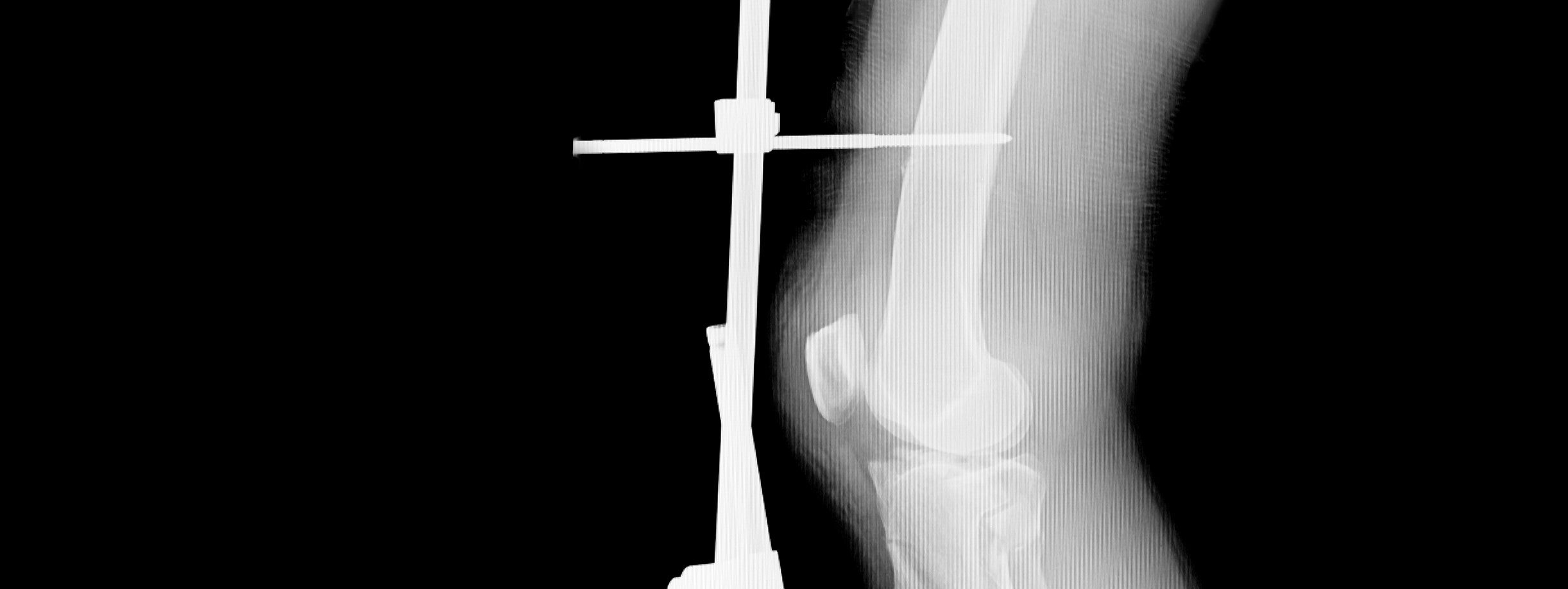
Los External fixators are devices used to stabilize broken bones with a series of rods, wires, and rings positioned outside the body. They can be used temporarily or permanently for:
Fracture stabilization:Provide stability to broken bones.
Nonunion correction:Promote healing in fractures that have not consolidated properly.
Infection management:Help control infection in complicated fractures.
Bone deformity correction:Realign deformed bones.
Limb lengthening:Increase the length of a limb.
Joint fusion:Join bones to stabilize a joint.
Bone defect treatment:Aid in regenerating lost bone.
Types of External Fixators:
Temporary:Used initially to stabilize the fracture and allow soft tissue recovery before internal fixation with plates or nails.
Ilizarov:Circular fixators that allow bone movement only vertically (up or down).
Hexapod:Circular fixators with multiple axes of movement to progressively correct deformities. Adjustments are programmed using software that indicates the necessary changes in the fixator’s struts.
Pin Care for External Fixators:
Proper care of the pins is essential to prevent infection. Follow these steps:
- Wash your hands with soap and water before handling the fixator.
- If there is gauze around a pin, remove it by sliding the plastic toward the fixator ring.
- You can shower with the fixator. Rinse both the limb and the fixator thoroughly with mild soap and water. You can also wash the pins directly with water and soapy chlorhexidine.
- Carefully dry the pins with sterile gauze. For the fixator, you may use a towel or a hair dryer on a cold setting to avoid burns.
- Spray gauze with aqueous chlorhexidine and clean each pin circumferentially, using a different gauze for each pin.
Monitoring Pins for Infection. Regularly check the pins for signs of infection:
Healthy: Clean, no discharge, swelling, redness, or pain.
Irritated: Pain when touched, redness, and clear fluid discharge.
Infected: Abundant discharge, pus, intense redness, pain, and possible swelling of the limb.


Comments are closed